





Azure DevOps Test Management Software for QA Teams
Your team builds and ships in Azure DevOps. Your QA team needs a place made for testing. Kualitee connects the two. Requirements, issues, bugs and impediments sync both ways. So a bug logged in one shows up in the other. Your test cases, executions and defects live in Kualitee. Azure DevOps stays where your developers work.
Connect Azure DevOps With Dedicated Test Management
Azure DevOps and Kualitee handle two different parts of the job. Together they cover the full path, from writing code to testing it.
Azure DevOps runs your development. It's where your team:
- ✓ Tracks work items, bugs and boards
- ✓ Manages repos and pipelines
- ✓ Plans and ships releases
Kualitee runs your testing. It's where you:
- ✓ Kualitee runs your testing. It's where you:
- ✓ Run test executions and record results
- ✓ Track defects through a full QA workflow
Here's the problem. Development work items and QA defects sit in separate systems. A defect gets logged in one. The other never gets the update. The two teams fall out of step.
Kualitee closes that gap. The Azure DevOps integration keeps requirements, issues, bugs and impediments aligned across both. Change a status or a label in either tool, and it shows up on the other side.
Why QA Teams Connect Azure DevOps With Kualitee
Connecting the two takes the manual work out of keeping development and QA aligned. Here's what you get.
Keep QA and Development Connected
Your testing in Kualitee links to the work items your team already tracks in Azure DevOps. Both sides see the same issues.
Two-Way Sync
Log a bug in either tool. It shows up in the other. Auto-sync cross-references defect activity between both projects.
Manage Testing in a Real QA Environment
Test cases, executions, cycles, defects and reports all live in Kualitee.
See Where Testing Stands
QA and development both get a clear view of testing progress and open defects.
How Azure DevOps Test Management Works With Kualitee
This is the part that matters most day to day. Here's how a bug moves once the two are connected.
- ✓ A tester runs a test case in Kualitee and finds a bug.
- ✓ They log it as a defect, with the steps and details.
- ✓ The defect syncs to Azure DevOps as a work item.
- ✓ A developer picks it up and fixes it.
- ✓ The update syncs back to Kualitee, ready for QA to check.
- ✓ The tester retests. If it passes, the issue closes on both sides.
One bug, tracked from both sides, the whole way through. Nobody re-types it into a second tool. Nobody guesses which version is current.
You can close an issue, change its status, or assign a label from either tool. The change reflects on both. Your QA team works in Kualitee. Your developers stay in Azure DevOps.

Azure DevOps Alone vs Azure DevOps With Kualitee
Azure DevOps is built to run development. Running a QA process is a different job. Here's what the integration adds.
| Task | Azure DevOps on its own | Azure DevOps + Kualitee |
|---|---|---|
| Work items and boards | Built for it, works well | Stays in Azure DevOps, nothing changes |
| Structured test cases | Work items, not test cases | Full test case repository with steps and results |
| Test execution tracking | Test Plans, at a higher license tier | Run tests and record pass or fail per cycle |
| Requirement and bug sync | Lives only in Azure DevOps | Syncs both ways with Kualitee |
| Defect management | Work item status | Full defect lifecycle with severity, priority and ownership |
| Requirement traceability | Manual to maintain | Requirement to test to defect, linked |
| QA reporting | Dev-focused dashboards | Test and defect reports built for QA |
Your developers keep working in Azure DevOps. Kualitee adds the test management layer, and the sync means neither side has to update the other by hand.
Key Features of Azure DevOps Test Management Software
These are the features that make the Azure DevOps connection work.
Two-Way Azure DevOps Sync
Requirements, issues, bugs and impediments sync both ways. Status and label changes reflect on both sides.
Test Case Management
Create, organize, assign and manage structured test cases in one QA environment.
Test Execution
Run test cases and track results across cycles and releases.
Defect Management
Log defects and manage them through their lifecycle, with status, priority, ownership and retesting.
Test Reporting
Track test cases, executions, defects and QA progress through dedicated reports and dashboards.
Azure DevOps Test Case Management With Kualitee
You can track test cases as work items in Azure DevOps. It works for a while. The strain shows once testing gets serious.
A real test case needs steps, expected results, a pass or fail record and a link to what it covers. A full QA process needs suites, cycles, regression runs and traceability. That's a lot to ask of a board built for dev work items.
Kualitee is built for it. Your team gets:
- ✓ Test case organized into suites
- ✓ Clear steps and expected results
- ✓ Test execution and status tracking
- ✓ Regression testing between releases
- ✓ Requirement traceability from test to defect
- ✓ Defect tracking in one place
Azure DevOps handles the dev work items. Kualitee gives your test cases somewhere built for QA.
A Lighter Option Than Azure DevOps Test Plans
Azure DevOps has its own testing product, Azure Test Plans. It does the job, but it sits behind a higher license tier, and plenty of teams find it more than they need.
Kualitee is a simpler way to manage testing around Azure DevOps. You keep Azure DevOps for development. You run your test cases, executions and defects in Kualitee. The two sync both ways, so nothing gets lost between them.
Here's what that looks like:
- ✓ Test case management without the Test Plans license tier
- ✓ Two-way sync of requirements, bugs and issues
- ✓ A full defect workflow with severity and priority
- ✓ QA reporting built for testers, not just developers
- ✓ Automation testing managed in the same place
This doesn't replace Azure DevOps. It gives your QA team a cleaner place to work, connected to the boards your developers already use.
Manage Azure DevOps Defects in Your QA Workflow
When a test fails, you need more than a work item marked active. You need a defect you can own, prioritize and retest.
Here's the flow. A test fails in Kualitee. You raise a defect. It syncs to Azure DevOps as a work item. From there, you get:
- ✓ Defects created straight from failed tests
- ✓ Two-way sync between Kualitee and Azure DevOps
- ✓ Clear status, severity and priority
- ✓ Ownership on every defect
- ✓ Retesting until the fix holds
- ✓ QA and developers working from the same information
QA manages the defects in Kualitee, and developers keep working with work items in Azure DevOps. Both sides see the same thing.
How the Kualitee Azure DevOps Integration Works
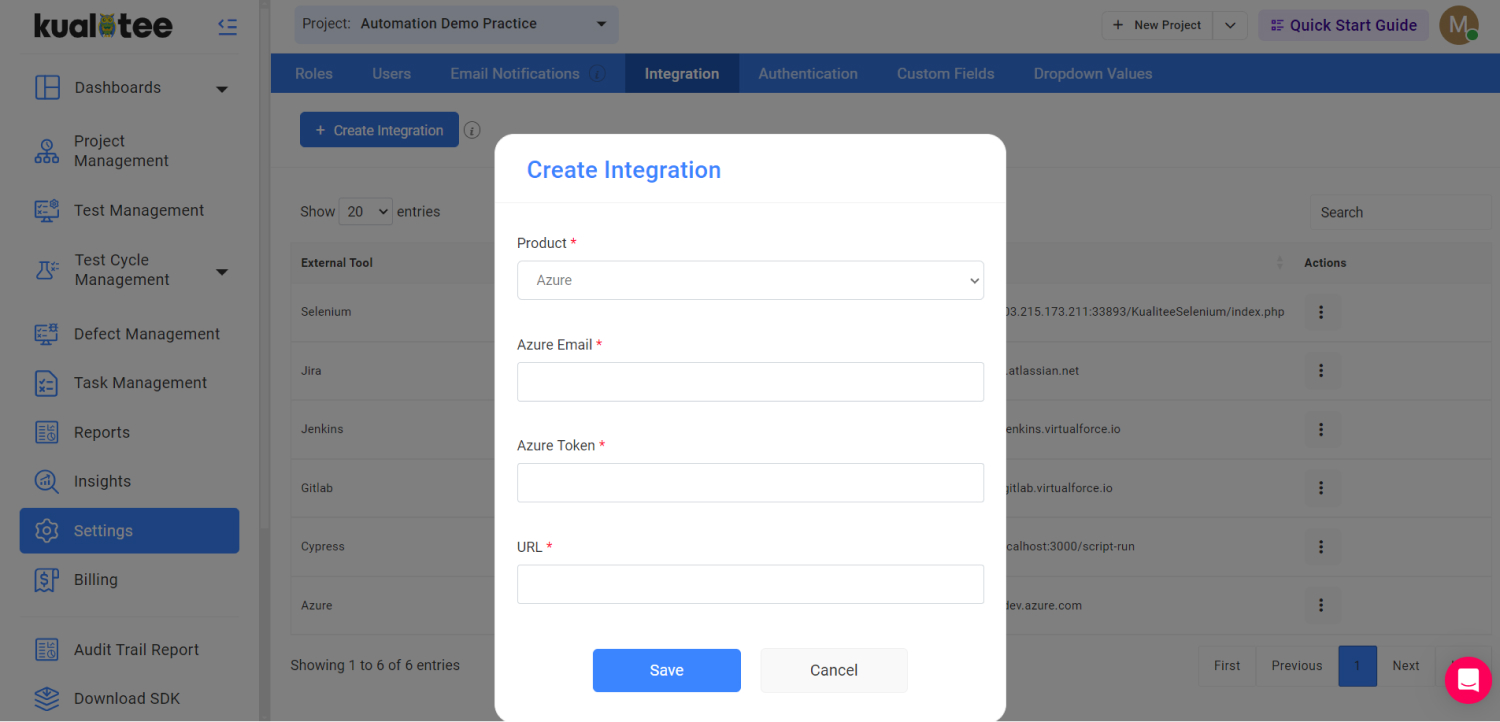
Setup takes a few steps, and you'll need admin access to both tools. The full walkthrough is in the Kualitee User Guide.
Open Integration Settings
In Kualitee, go to Settings and select Integration from the top bar.
Create the Integration
Choose Create New, then pick Azure from the drop-down.
Add Your Azure Details
Enter your Azure email, Azure token and Azure URL. Save to confirm.
Map and Sync
Link your Azure and Kualitee projects. Requirements, issues, bugs and impediments start syncing both ways.
What's the Difference Between Azure DevOps and Test Management Software?
Both deal with work items and bugs, so the line can blur. The difference is what each one is built for.
- ✓ Azure DevOps is a development platform. You use it for repos, pipelines, boards and shipping software.
- ✓ Test management software like Kualitee is built for QA. That means test cases, executions, cycles, requirements, defects, regression testing and reporting.
They aren't rivals. Azure DevOps runs the development side, Kualitee runs the QA side, and the integration ties them together so both teams work from the same information.
Frequently Asked Questions
Test management software is a tool built for QA. You use it to create test cases, run executions, track defects and report on testing. Azure DevOps test management software connects that to Azure DevOps, so your development work stays in Azure DevOps while Kualitee handles the test cases, executions and defects, with issues synced between the two.
Yes. Kualitee has a two-way integration with Azure DevOps. You connect the two with an Azure email, token and URL, then requirements, issues, bugs and impediments sync across both.
It syncs requirements, issues, bugs and impediments both ways. You can change a status or a label in either tool, and it reflects on the other side.
Kualitee is a lighter way to manage testing around Azure DevOps. You get test case management, a full defect workflow and QA reporting, without the Test Plans license tier, and it syncs both ways with your Azure DevOps projects.
Yes, and that's the point. Your team keeps tracking work in Azure DevOps while QA manages test cases, executions and defects in Kualitee. The two stay connected.
No. Kualitee works alongside Azure DevOps. Azure DevOps stays your home for development, and Kualitee adds test management, defect tracking and reporting around it.
Start Managing Your Azure DevOps Testing in Kualitee
Keep Azure DevOps for your development work. Give your QA team real tools for test cases, execution, defect tracking and reporting. Connect the two, sync your issues both ways, and bring development and testing into one workflow.
Start a free trial and connect your Azure DevOps project with Kualitee. Or book a demo and we'll walk you through it.